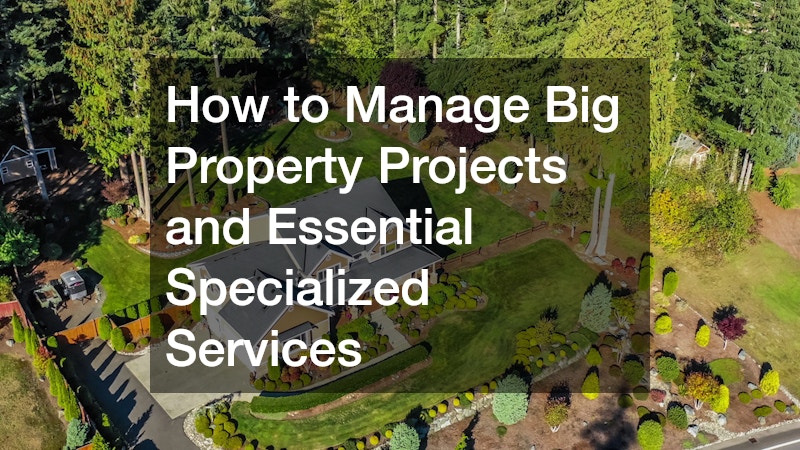
Managing a major property overhaul is one of the most challenging yet rewarding endeavors a homeowner can undertake. Whether you are tackling an extensive estate restoration, preparing a newly acquired rural plot for development, or coordinating a comprehensive structural and exterior renovation, the complexity of these operations can quickly become overwhelming. Large-scale property management demands far more than basic DIY enthusiasm or simple weekend handyman skills; it requires strategic foresight, strict logistical coordination, rigorous budget allocation, and the seamless integration of highly specialized professional services.
1. Project Planning & Property Assessment
Before breaking ground or hiring heavy equipment, every successful property transformation begins with rigorous planning and a thorough site evaluation. Attempting to skip this phase often results in costly design changes, damaged utilities, or unexpected delays halfway through construction.
Establish Strategic Goals & Scope Boundaries
- Define Project Outcomes: Clearly outline what success looks like for your property. Differentiate between essential structural needs (such as fixing a failing slope or replacing a roof) and aesthetic wants (such as custom landscaping or hardscaping).
- Establish Budget Caps and Contingencies: Build a firm financial framework. Always reserve 15% to 20% of your total budget for unforeseen site conditions, such as buried debris, unmapped rock formations, or hidden water damage.
- Identify High-Risk Property Zones: Pinpoint areas that require special care, such as old utilities, steep grade changes, low-lying flood zones, and aging outbuildings that may present structural risks.
Conduct High-Precision Site Surveys
Visual inspections from the ground level only reveal a fraction of a property’s true conditions. On large acreage or properties with varied terrain, traditional manual measurement can be slow, expensive, and prone to human error. Modern site planning relies on advanced technical surveys to create accurate baselines for earth-moving and construction.
Utilizing aerial survey technology, such as aerial land analysis and drone mapping, allows property managers to capture high-resolution topographic data, measure precise elevation shifts, and calculate exact cut-and-fill volumes for dirt work. These aerial insights highlight drainage patterns, canopy density, and structural footprints across the entire parcel without requiring invasive manual clearing. Having precise spatial data upfront prevents costly mistakes when positioning fresh foundations, access roads, or utility runs.
2. Site Preparation & Hazard Mitigation
Once the master plan is finalized, attention must shift toward preparing the land and neutralizing potential hazards. Skipping proper site mitigation puts workers in danger and exposes your existing structures to preventable damage.
Implement Environmental Hazards Inspections
Older homes and neglected properties often harbor hidden biological and chemical risks that must be safely contained or removed before major construction begins. Disrupting these hazards during demolition can spread contamination throughout the entire living area.
- Test for Chemical and Mineral Hazards: Inspect structures for lead paint, asbestos, and soil contamination, particularly around old outbuildings or industrial storage areas.
- Address Interior Environmental Moisture: Moisture intrusion from leaking roofs, flooded basements, or poor ventilation can quietly ruin a building’s structural integrity.
- Execute Targeted Environmental Remediation: When water damage leads to severe fungal growth, professional mold remediation must be completed under strict containment protocols. Technicians use negative air pressure, HEPA filtration, and antimicrobial treatments to eliminate spores, ensuring that demolition work does not push toxic contaminants into clean living quarters.
Establish Land Clearing Safety Protocols
Clearing trees, brush, and boulders is essential for creating working room around building footprints, but it represents some of the most dangerous work on any property project.
- Call Before You Dig: Always contact local utility locator services to mark buried electrical, gas, fiber optic, and water lines before striking the ground with excavators or augers.
- Identify Hazardous Flora: Locate dead, leaning, or diseased timber that poses an immediate threat to workers, power lines, or structural foundations.
- Hire Licensed Arborists and Clearing Specialists: Removing large trees near homes or utility lines requires heavy rigging and specialized machinery. Contract experienced tree removal companies to safely fell, chip, and haul away massive timber. Professional arborists know how to control the fall line of heavy limbs, preventing catastrophic impacts on surrounding structures and keeping the work area safe for follow-up crews.
3. Logistics, On-Site Comfort, and Debris Management
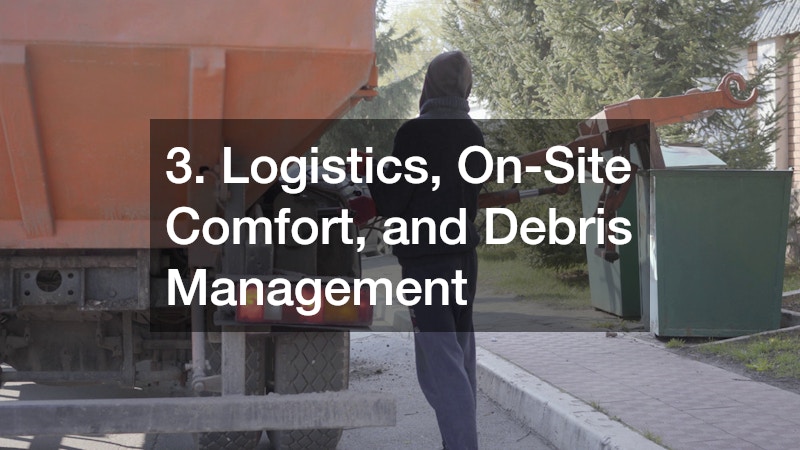
A well-run job site depends as much on logistics as it does on skilled craftsmanship. Managing traffic, waste, and basic human needs prevents chaos, maintains safety, and keeps contractor productivity high.
Optimize Heavy Equipment Access Routes
Heavy machinery, delivery flatbeds, and concrete mixers require stable, wide access paths to enter and maneuver across your land without getting stuck or damaging surfaces.
- Establish Wide Turn Radii: Ensure access gates and interior paths provide a minimum clearance of 12 to 15 feet in width, along with sufficient overhead clearance beneath tree limbs and service wires.
- Designate Dedicated Staging Zones: Set aside a firm, level area for equipment parking, fuel storage, and material unloading, well away from main traffic flows.
- Implement Dust and Mud Control: Spread gravel over high-traffic dirt entry points to catch mud before trucks track it onto public roads, and use water sprays to suppress airborne dust during dry conditions.
Set Up Dedicated Sanitation for Work Crews
When hosting large multi-trade work crews for weeks or months at a time, protecting the privacy and cleanliness of your main residence is essential. Relying on interior bathrooms creates tracking issues, compromises residential security, and disrupts daily family life.
Providing dedicated, high-capacity sanitation facilities keeps crews focused on site while maintaining hygienic standards. Installing a modern restroom trailer provides tradespeople with running water, climate control, flushing toilets, and proper handwashing sinks. This setup keeps all worker foot traffic strictly outside your home, maintains professional working conditions, and ensures compliance with occupational health guidelines during lengthy outdoor projects.
4. Ground Infrastructure & Driveway Upgrades
Long before final cosmetic finishes are applied, property owners must address the foundational surfaces that support daily vehicle traffic and protect against water accumulation.
Assess Soil Stability and Drainage Sub-Bases
The longevity of any driveway, patio, or building foundation depends entirely on the stability of the soil beneath it. Water is the primary enemy of ground infrastructure; poor drainage leads to soil erosion, frost heaving, and eventual structural collapse.
- Evaluate Soil Composition: Determine whether your sub-base consists of expansive clay, loose sand, or stable gravel, adjusting compaction and drainage methods accordingly.
- Grade for Positive Runoff: Shape all ground surfaces to slope away from home foundations at a minimum decline of 2% (a two-inch drop for every eight feet of distance).
- Install Subsurface Drainage Solutions: Dig deep swales or install French drains lined with geotextile fabric and perforated pipe to collect subsurface groundwater and redirect it away from structural zones.
Execute Structural Pavement Restorations
Driveways take a severe beating during major property overhauls. Heavy supply trucks, concrete mixers, and dumpster container drop-offs can easily fracture older surfaces, turning minor wear into major structural failures.
Restoring damaged surfaces requires addressing the underlying sub-base before applying top coats. When dealing with cracked, pitted, or sagging driveways, scheduling professional asphalt repairs stabilizes the ground layer, fills deep surface fractures, and seals low spots where standing water collects. Prompt restoration prevents water from penetrating the base layer, halting further freeze-thaw degradation and restoring a smooth, resilient surface capable of supporting heavy residential traffic.
5. Decommissioning & Upgrading Fuel & Heating Systems
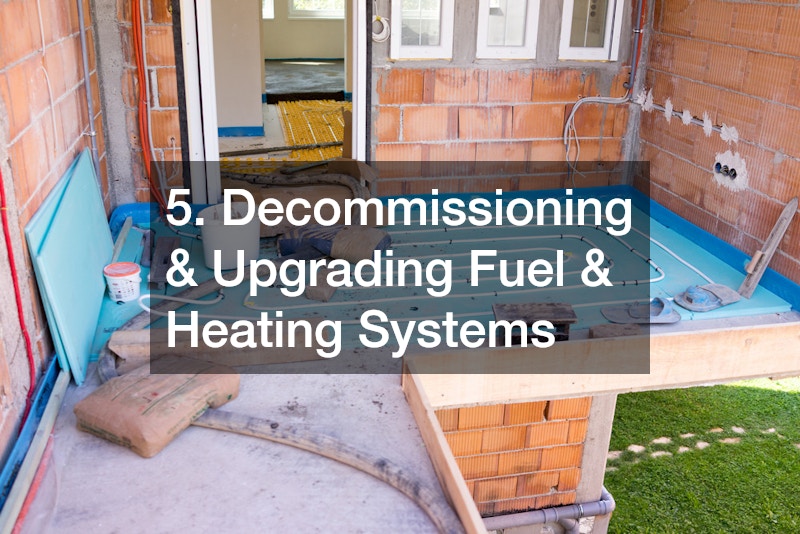
Updating a property often requires replacing outdated, hazardous heating systems with modern, efficient, and environmentally sound energy infrastructure. Handling fuel systems demands specialized expertise and strict adherence to environmental regulations.
Safe Removal of Legacy Subsurface Fuel Storage
Many older rural and suburban properties rely on aging underground oil tanks that pose severe environmental and financial risks. Over time, buried steel tanks corrode, leading to hidden fuel leaks that contaminate surrounding soil and groundwater. Residential oil delivery could also be important.
Resolving these liabilities requires a systematic, certified decommissioning process. Engaging qualified environmental contractors for complete oil tank removal ensures that old underground vessels are safely pumped dry, excavated, tested for leaks, and disposed of according to strict EPA guidelines. Professional removal teams also take soil samples around the excavation cavity to confirm no historical contamination exists, providing official documentation that protects your property value and simplifies future real estate sales.
Transitioning to High-Efficiency Auxiliary Fuel Solutions
After removing outdated underground infrastructure, homeowners often shift to versatile, clean-burning alternative fuel sources to power modern high-efficiency furnaces, backup generators, tankless water heaters, and outdoor kitchens.
Liquefied petroleum gas, commonly known as propane, offers exceptional energy density, clean combustion, and long-term storage stability without the risk of soil contamination. Installing above-ground or underground storage tanks provides a reliable primary or secondary power supply that keeps critical home heating systems and emergency generators running smoothly during major grid outages or severe winter storms.
6. Structural Modifications & Material Relocation
Major structural alterations—such as adding a second story, expanding a ground-floor footprint, or stripping back to the studs—require clear access and rigorous protection for your property and possessions.
Protecting Interior Belongings During Exterior Expansion
Renovation dust and structural vibrations travel through a house far faster than most homeowners anticipate. Demolition work, roof tear-offs, and floor leveling generate fine concrete, plaster, and sawdust that can ruin electronics, furniture, and personal clothing if not managed properly.
- Erect Dust Containment Barriers: Install heavy-duty plastic sheeting with magnetic self-closing zippers across doorways connecting active construction zones to living quarters.
- Set Up Air Scrubber Units: Run industrial air scrubbers equipped with HEPA filters to maintain negative pressure within the work zone, pulling airborne dust out of the home before it settles.
- Clear Out Adjacent Rooms Completely: Rather than shuffling furniture from corner to corner, clear the entire work area and adjacent rooms. Contracting professional moving services ensures that heavy furniture, delicate artwork, and household belongings are safely packed, transported, and stored in off-site climate-controlled facilities. Clearing the space protects your valuables from accidental impact damage and gives contractors room to work efficiently.
Managing Material Staging & Phasing Workflows
Handling building materials efficiently prevents site congestion, minimizes weather damage, and avoids costly material re-orders.
- Implement Just-in-Time Material Delivery: Schedule bulk shipments of lumber, drywall, and roofing materials to arrive right as they are needed, rather than storing them on-site for weeks where they can absorb moisture or get damaged.
- Elevate and Cover Staged Goods: Always store timber, framing members, and masonry off the bare ground on level dunnage or wooden pallets, wrapping them in breathable, waterproof tarps to prevent warping and mold growth.
- Organize Hardware and Fixtures: Establish a secure, locked storage shed or trailer on-site for high-value items like electrical fixtures, plumbing brass, power tools, and custom hardware.
7. Contractor Management & Final Quality Assurance

The success of any property project depends heavily on clear communication, structured supervision, and thorough quality verification before final payments are released.
Supervising Specialized Subcontractors
Managing multiple specialized trades—plumbers, electricians, masons, and excavators—requires a structured approach to daily communication, access, and schedule management.
- Establish Daily Operational Rules: Set firm rules regarding job site hours, noise limits, parking locations, smoking restrictions, and cleanup expectations.
- Hold Daily Briefings: Conduct brief stand-up meetings with trade leads every morning to review planned tasks, coordinate overlapping work areas, and clear away immediate bottlenecks.
- Tie Payments to Specific Milestones: Structure subcontractor agreements around verifiable physical milestones (e.g., foundation poured, framing inspected, rough-in complete) rather than rigid calendar dates.
Conducting Comprehensive Punch List Inspections
As individual phases near completion, conduct thorough walk-through inspections to identify unfinished work, installation flaws, or minor cosmetic damage that must be corrected.
- Inspect Visual and Structural Finishes: Check walls for smooth finish quality, inspect trim work for tight joints, and verify that all painted surfaces are evenly covered without drips or runs.
- Test Mechanical and Electrical Systems under Load: Run all HVAC systems, turn on simultaneous plumbing fixtures to test water pressure and drainage, and check every electrical outlet with a circuit tester.
- Verify Exterior Grading and Cleanliness: Walk the entire perimeter of the property to confirm that ground slopes direct water away from structures, that backfilling around foundations is fully compacted, and that all construction debris has been cleared from lawns and beds.
Managing a large property project requires balancing big-picture vision with disciplined attention to detail. By systematically tackling site evaluation, hazard containment, site logistics, and infrastructure upgrades, you protect your land and build lasting value into your home. With clear planning, realistic timelines, and the help of specialized trade professionals, even the most daunting property transformation can run smoothly, safely, and successfully.
