
Household utility bills often quietly drain thousands of dollars from family budgets every year, not because residents are careless with their habits, but because the structure itself is operating inefficiently. Many homeowners believe that lowering energy costs requires nothing more than turning down the thermostat, switching off ambient lighting, or unplugging small kitchen appliances. While these behavioral tweaks can trim a few dollars from a monthly invoice, they barely scratch the surface of true domestic energy waste. Real, lasting financial relief demands a systemic approach that addresses how a house actually gains, retains, and distributes heat, air, and power.
Every residence operates as an interconnected ecosystem. Conditioned indoor air constantly escapes through unseen structural gaps, thermal bridges bypass fiberglass insulation, aging cooling machinery works overtime against high duct static pressure, and phantom electrical currents draw steady wattage 24 hours a day. When mechanical equipment and structural envelopes degrade or fall out of calibration, utility meters spin rapidly without delivering tangible comfort. Achieving dramatic, sustained reductions in utility expenses requires targeted investments in building science, mechanical optimization, and automated load control. By focusing on high-impact structural and infrastructural improvements, you can permanently reduce baseline power consumption, elevate day-to-day comfort, and protect the long-term value of your property.
Seal the Roof Deck and Optimize Attic Air Barriers

Heated air naturally rises through conditioned living areas, accumulating directly beneath your roof deck before escaping into the atmosphere. This natural physical phenomenon, known as the stack effect, transforms upper floor ceilings and unfinished attics into the primary escape routes for conditioned winter warmth. During hot summer months, the dynamic reverses: intense solar radiation superheats the roof sheathing, radiating thermal energy down into living spaces and forcing cooling equipment to run continuously. Tackling energy waste at the building’s highest horizontal plane provides an immediate and substantial reduction in total annual energy consumption.
Traditional loose-fill fiberglass and blown-in cellulose batts often permit microscopic air migration through ceiling joists, plumbing chases, and recessed lighting canisters. Upgrading these vulnerable overhead boundaries requires a comprehensive combination of structural remediation and advanced insulation chemistry.
- Apply closed-cell insulation materials: Selecting spray foam roofing on low-slope decks or unvented attics creates a seamless, self-adhering moisture and air barrier that cures into a rigid structural shield. Unlike fibrous insulation, expanding foam completely fills irregular gaps, rafter corners, and fastener penetrations, delivering an exceptional thermal resistance per inch that halts both convective and conductive heat transfer.
- Reinforce the structural decking and underlayment: Energy efficiency cannot succeed atop failing structural substrates. Partnering with licensed residential roofing contractors ensures that rotten decking is replaced, drip edges are correctly positioned, and multi-layered weather barriers are installed prior to applying high-performance coatings or high-reflectivity shingles.
- Balance ridge and soffit passive airflow: For traditionally vented attics, maintaining clear continuous ventilation prevents radiant heat build-up. Ensuring that attic baffles prevent loose materials from clogging exterior eaves keeps air moving smoothly across the underside of the deck, carrying away excess moisture before it compromises insulation effectiveness.
- Seal recessed fixtures and structural bypasses: Caulk and flash around chimney flues, attic access hatches, drop-down stairs, and conduit penetrations. These tiny, unsealed bypasses can account for up to thirty percent of total overhead air infiltration if left exposed to ambient attic conditions.
By securing an airtight ceiling plane and insulating the overhead boundary, you transform an attic from an energy-draining heat chimney into a stable thermal cap.
Fortify the Exterior Envelope and Eliminate Wall Infiltration

While the roof manages vertical thermal drift, exterior walls represent the largest cumulative surface area exposed to ambient weather conditions. In homes built prior to modern energy codes, exterior wall cavities often suffer from settled insulation, deteriorated building wraps, and unsealed perimeter gaps. When wind buffets the home, outdoor air presses inward through siding lap seams, electrical junction boxes, and perimeter framing, displacing conditioned air and destabilizing indoor room temperatures.
Solving this persistent energy drain requires a dual-track strategy focusing on continuous exterior insulation barriers and high-performance fenestration upgrades.
- Eliminate wall framing thermal bridges: Standard wooden wall studs conduct outdoor heat and cold directly through interior drywall, bypassing internal cavity batts entirely. Working with qualified siding contractors allows homeowners to wrap external sheathing in continuous rigid foam board beneath new cladding. This continuous exterior thermal break seals perimeter sill plates, eliminates framing drafts, and integrates high-performance drainage wraps to manage bulk water infiltration.
- Replace deteriorating, single-pane glass assemblies: Aging windows with rotted wood sashes or warped vinyl frames allow massive quantities of conditioned air to leak out around the perimeter. Committing to a comprehensive window replacement using modern multi-pane units instantly upgrades comfort. Selecting units engineered with low-emissivity (Low-E) coatings, argon or krypton gas fills, and warm-edge thermal spacers blocks unwanted radiant solar heat in the summer while reflecting interior radiant warmth back into the home during freezing weather.
- Caulk and seal window and door rough openings: Simply setting modern glass frames into existing rough framing is insufficient. Installers must flash perimeter sills with flexible self-adhering membranes, insulate rough gaps with non-expanding closed-cell foam, and apply exterior commercial-grade elastomeric sealants around casing trim.
- Insulate exterior band joists and rim joists: The transition zone where exterior walls meet the foundation slab or basement framing is notoriously drafty. Spraying closed-cell polyurethane foam along interior rim joist bays creates an impermeable barrier against cold perimeter drafts.
Tightening the vertical walls stops drafts and dramatically lowers the mechanical workload on heating and cooling equipment.
Recalibrate Cooling Equipment and Seal Distribution Ducts
Even an airtight exterior envelope will fail to deliver expected monthly savings if central cooling and air circulation systems are operating out of factory specification. In many residences, central cooling equipment consumes more electricity than all other household appliances combined. When compressors struggle against improper refrigerant levels, clogged heat exchangers, or restricted duct networks, overall system efficiency plummets, causing continuous cycling and exorbitant peak-rate utility charges.
Maximizing cooling efficiency requires fine-tuning mechanical operating tolerances and ensuring that the air delivery pathway functions without unmetered losses or static pressure bottlenecks.
- Calibrate system pressures and thermal heat exchange: When refrigerant charges deviate by even five to ten percent from manufacturer specifications, compressors work significantly harder to produce conditioned air. Enlisting a skilled ac repair contractor ensures that system pressures, subcooling curves, and superheat measurements are accurately set using digital manifold gauges. Furthermore, chemically cleaning exterior condenser fins removes compacted pollen, dirt, and road grime, allowing coils to disperse absorbed heat rapidly into ambient air.
- Conduct comprehensive duct airflow and static pressure testing: Conditioned air frequently leaks out of joints, takeoffs, and plenums before reaching living rooms. Booking whole-home HVAC services allows technicians to run manometers and flow hoods across branch registers. Sealing open sheet metal seams with mastic paste and fiberglass mesh tape—rather than temporary adhesive tapes—keeps conditioned air inside duct pathways, reducing runtimes and equalizing room temperatures.
- Upgrade to smart, multi-stage thermostatic controls: Traditional single-stage thermostats run compressors at full capacity or not at all, creating large temperature swings and excessive energy draws. Installing modern smart thermostats enables precise scheduling, adaptive recovery, and multi-stage control that runs equipment at lower speeds for longer, more energy-efficient intervals.
- Replace air filters on strict, scheduled rotations: High-efficiency particulate air filters capture airborne debris, but overdue replacements cause dangerous static pressure buildup. Maintaining clean, high-airflow pleated filters protects blower fan motors from premature burnout and ensures adequate CFM across the evaporator coil.
Targeted cooling tune-ups restore factory SEER ratings, ensuring that every kilowatt drawn by the compressor delivers maximum cooling output.
Maximize Burner Performance and Protect Auxiliary Supply Lines

Hydronic and forced-air combustion systems remain primary cost centers in colder climates, where winter fuel expenses can easily spiral during prolonged sub-freezing weather. Over months of heavy operation, combustion chambers accumulate soot, fuel pump pressures fluctuate, and mechanical delivery nozzles suffer from microscopic orifice wear. Without regular professional calibration, burners operate with poor air-to-fuel ratios, exhausting unburned energy straight up the chimney flue while driving up fuel replenishment frequency.
Optimizing combustion efficiency requires systematic burner servicing paired with rigorous protection of auxiliary closed-loop water systems that support domestic mechanical infrastructure.
- Establish preventive fuel delivery and combustion maintenance: Relying on experienced heating oil services guarantees that fuel tanks remain free of bottom-sludge condensation and microbial contaminants that clog burner lines. Professional service visits should include replacing secondary fuel filters, swapping worn brass burner nozzles, brushing cast-iron boiler heat exchangers, and using digital combustion analyzers to calibrate draft pressures and smoke spots for maximum thermal output per gallon.
- Integrate outdoor reset controls on hydronic systems: Standard boilers cycle based solely on fixed internal water temperatures, firing at maximum capacity even on mild forty-degree days. Adding electronic outdoor reset sensors monitors ambient outdoor temperatures, automatically modulating boiler water supply temperatures downward on warmer days to drastically lower standby jacket losses and fuel consumption.
- Protect auxiliary lines through scheduled plumbing verification: High-efficiency heating boilers and outdoor irrigation systems rely on dedicated backflow preventer valves to prevent non-potable water, chemical treatments, and boiler additives from cross-contaminating municipal water supplies. Arranging certified backflow testing services guarantees that these mechanical spring-loaded check valves maintain proper directional flow and operating pressure without silent internal seat failures or water-wasting pressure dumps.
- Insulate exposed hydronic distribution and domestic hot water piping: Bare copper supply pipes continually radiate expensive heat into unconditioned basements and crawl spaces. Encasing all hot water distribution lines with closed-cell tubular foam insulation keeps circulating water hot, reducing boiler firing frequency and decreasing domestic water heater energy consumption.
Fine-tuning your combustion equipment and safeguarding water supplies ensures that every drop of purchased fuel translates directly into indoor warmth.
Modernize Circuit Infrastructure and Implement Smart Power Distribution
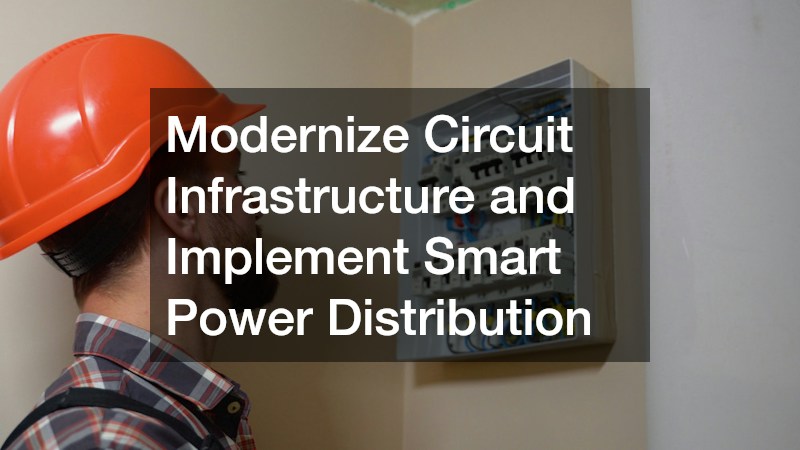
Even after upgrading the building shell and tuning central heating and cooling equipment, an outdated electrical infrastructure can silently sabotage your home efficiency goals. Modern households run dozens of connected devices, high-draw appliances, smart chargers, and continuous electronic entertainment hubs. Many of these consumer devices consume continuous standby electricity—often called phantom or vampire loads—even when powered off. Furthermore, older electrical breaker panels lack the branch-level granularity needed to manage dynamic peak power rates.
Modernizing your electrical backbone gives you actionable visibility into power consumption and enables automated load-shedding to minimize grid dependency during expensive peak-rate windows.
- Install smart breaker panels and real-time power monitors: Upgrading a legacy fuse box or standard panel with intelligent, app-connected smart breakers lets you see exact power usage per circuit. Hiring a licensed electrician to install branch-circuit CT clamps or smart panel hardware ensures that whole-house power draws are accurately calculated and balanced across both busbars. These systems allow homeowners to automate when high-draw circuits run, cutting off vampire power to unused entertainment centers, home offices, and secondary appliances during overnight hours.
- Provision high-efficiency dedicated sub-circuits and storage lines: As homes transition from fossil fuels to high-efficiency electric appliances, main service capacity must be properly configured. Contracting certified electrical services ensures your panel can handle dedicated 240-volt circuits for variable-capacity heat pumps, induction cooktops, high-efficiency hybrid heat pump water heaters, and whole-house battery storage systems without dangerous circuit overloads.
- Implement smart load shedding and off-peak charging schedules: Utility providers increasingly charge tiered time-of-use rates, where kilowatt-hour costs double or triple during late afternoon and early evening hours. Configuring automated relays or smart plugs to pause electric vehicle chargers, pool pumps, and domestic water heaters during peak rate windows shifts heavy power consumption to low-cost off-peak night cycles.
- Install whole-home transient voltage surge suppression: Voltage spikes from grid switching and summer lightning storms can damage the delicate printed circuit boards in high-efficiency heat pumps, modern refrigerators, and smart thermostats. Hardwiring a heavy-duty surge protection device directly at the main breaker protects your efficiency investments from catastrophic failure.
Automating your electrical distribution network eliminates phantom waste and capitalizes on lower utility rate structures without sacrificing convenience.
Lowering monthly utility bills is not an overnight project, nor does it require undertaking every major structural retrofit simultaneously. The most financially sound approach relies on a strategic, phased plan that addresses your property’s greatest thermal and mechanical vulnerabilities first. By tackling your home as a complete, unified system, each improvement builds on the last, delivering compounding reductions in baseline power, gas, and water usage.
Begin by ordering a comprehensive diagnostic energy audit featuring a calibrated blower-door depressurization test and thermal infrared imaging. This baseline diagnostic data reveals the exact locations of unconditioned air infiltration, insulation voids, and thermal bridging throughout your building envelope. Once primary thermal envelope leaks are sealed along the roofline, walls, and perimeter windows, your home will require significantly smaller heating and cooling capacities. Downstream equipment upgrades can then be properly downsized rather than oversized, lowering initial capital outlays and operating at peak mechanical efficiency for decades. Through structured investments in building durability, mechanical tuning, and automated circuit management, you permanently insulate your household budget against unpredictable utility rate hikes while enjoying superior year-round comfort.
